
N.A.S.A.’s Demise a Hint to Societies Opportunity
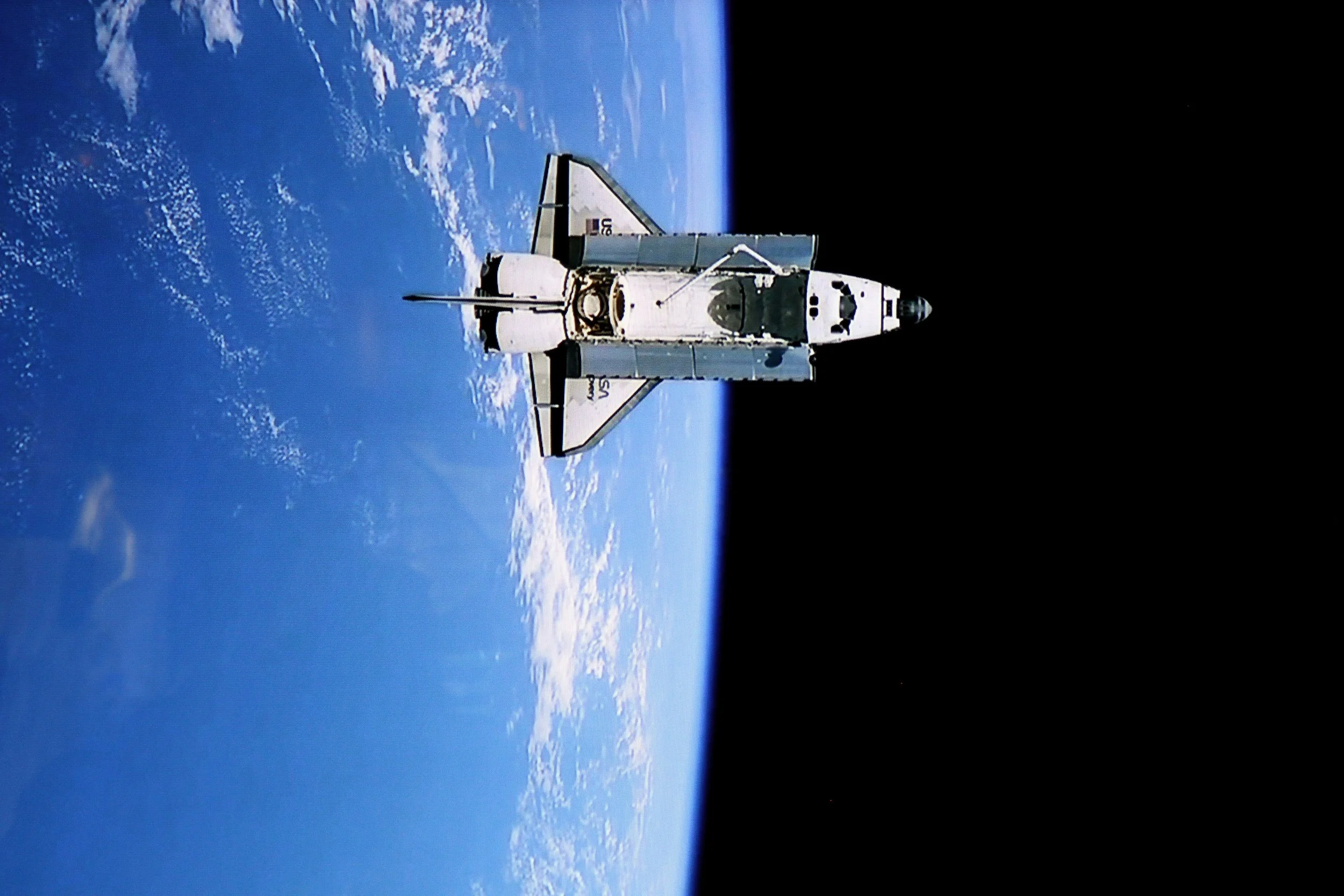
Space Shuttle Discovery. Under license; Wikimedia Commons
Having a Resilient Reason. . . Why? Might Save us From Ourselves
It is tough to watch the mighty fall. To see an institution that achieved so much, be reduced to a mere shadow of what it once was. This fall has been so powerful that some among us are tempted to deny their achievements. However, one only needs to watch a launch of the Saturn V of the Apollo 11 mission, to see for oneself that there was sufficient momentum to propel N.A.S.A and her astronauts (and by extension all of us) to the surface of the moon. But that was the apogee. Perhaps, along with the technical insights gained and not gained by N.A.S.A, that have propelled Space X, there is something more to employ to avoid a repeat fall.
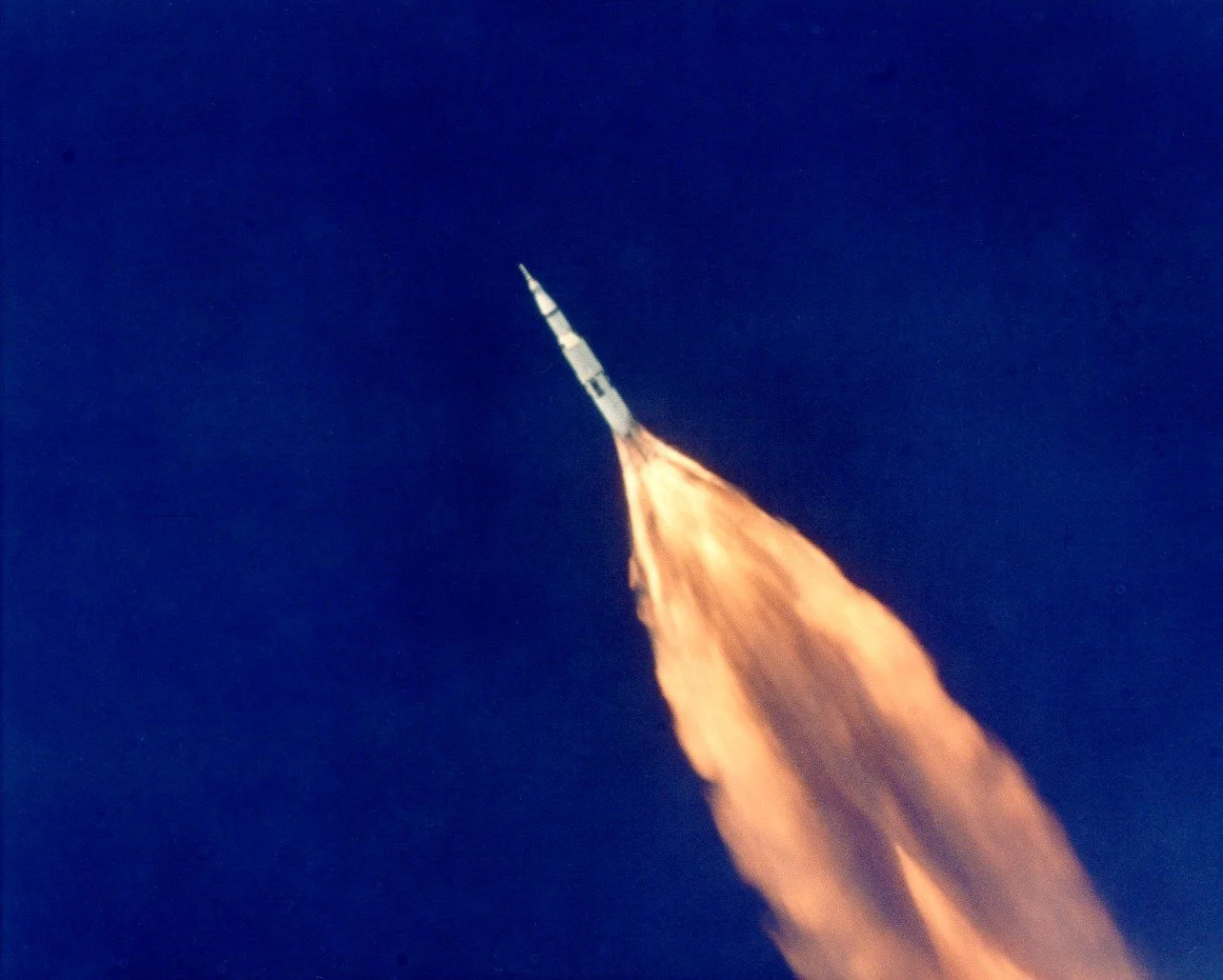
Apollo 11 Launch. Under license; Wikimedia Commons
I have a short story in mind about the journey to Mars Space X has planned. The main sketch of the tale is that humans succeed in arriving on the surface of the barren red planet. In their initial explorations the intrepid astronauts find antiquities that clearly show that humanity evacuated Mars after destroying her thousands of years ago. Earth has been our second chance and the typical amnesia humans have about failure is why we are powerless to remember being on Mars at all. Yes, a fantastical myth. But my outlined story points to a truth about lessons, they keep showing up in a cyclical fashion, seemingly anew, until we learn them.
Under license; Wikimedia Commons
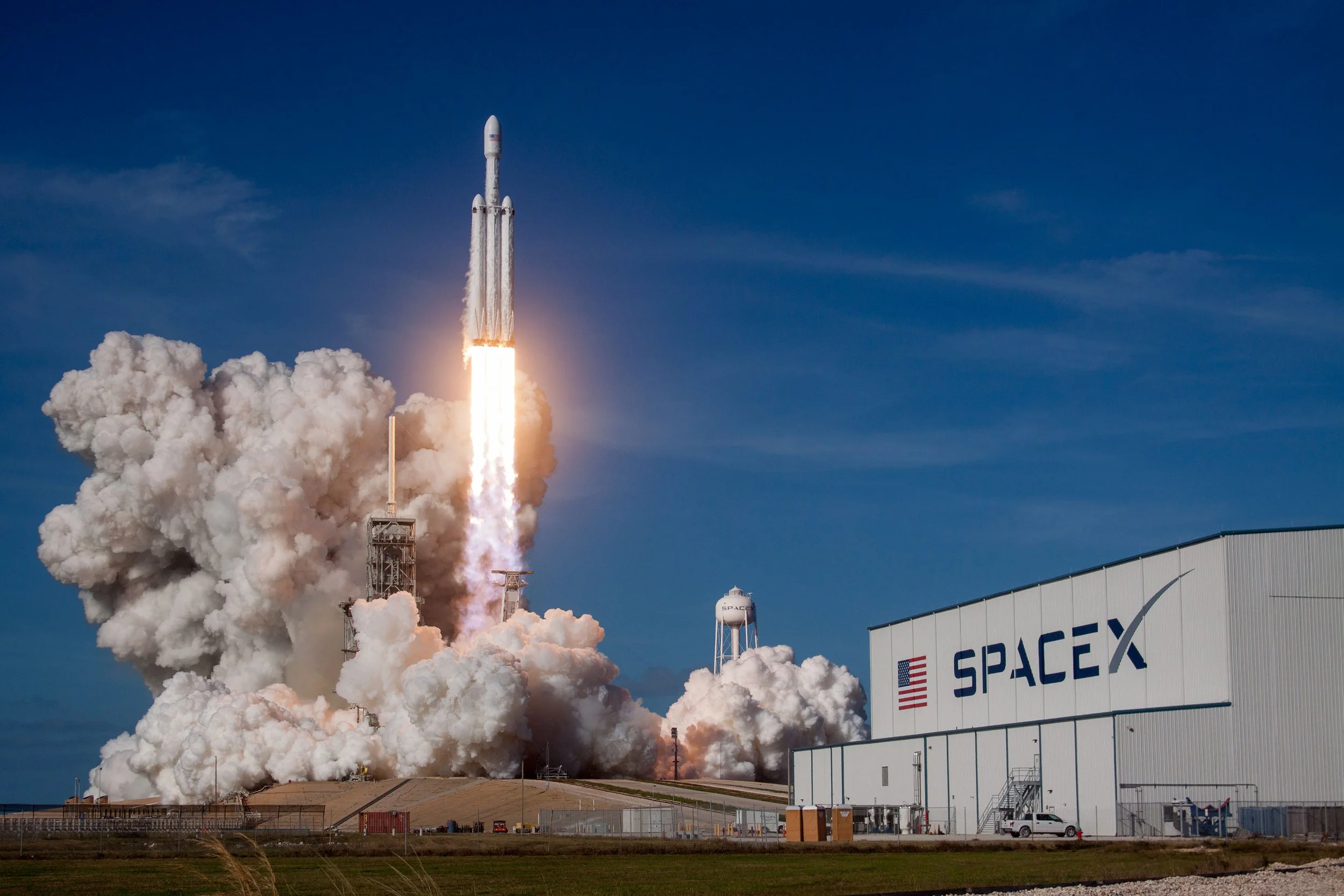
This is the reason for the fall of N.A.S.A . Their demise has been in the false belief that they were only on a technical journey, not really a human one. Some Apollo astronauts had epiphanies in space and were left to their own devices to metabolize when they returned (they were even demonized at times). We accepted that N.A.S.A. was not on a human journey. The monochromatic technically oriented Armstrong was the perfect archetype. They achieved what they believed their mission was, and so it is over. Sure, there has been a human journey. But the resolution of that journey pales in comparison to the resolution of the technical one. We can see this fact in the detail of stories we tell. It is all about the hardware and the destination. Gimballing engines take up the band width of what is really going on. Space X too is all about the hardware, the depth of the human “Why?” has not improved much. But if you want to capture the imagination and long term attention of human beings, you live the human development story, and then tell it. George Lucas, (inspired by Joseph Campbell) knows this well.
Without question, it was the lack of understanding about being human that led to the impulse choices behind the disastrous Space Shuttle Challenger launch and Columbia’s return. Challenger shows us that you don’t fix the problem by improving the technology, you need to grow the people so that you can mitigate a future event, like Columbia ended up being. Our cynicism about ourselves led to the acronym N.A.S.A. being interpreted as Need Another Seven Astronauts.
Let’s not be guided by cynicism, our mission and responsibility, should we choose to accept it, is to develop ourselves through the adventures embark upon on because the technological leverage we now have, requires wisdom at the controls. This is a message for Elon and for all of us. This is a mission that transcends cost. N.A.S.A would still be alive and well today, if this had been their guiding principle. Humanity will not only survive, but thrive, if this becomes ours. The question of how is simple, but the practice is hard. “Because that goal, will serve to organize and measure the best of our energies and skills. Because that challenge is one we are willing to accept, one we are unwilling to postpone, and one we intend to win.” JFK Rice University speech September 1962

Under License: Wikimedia Commons.