


Human Journey Card Deck
Elevate Decisions By Elevating One’s Mindset
Archetypal developed the Human Journey Card Deck to help people navigate adversity and risk, supported by the deepest possible reason “why?” There is no more important work than developing our capacity to become aware of and take control of our impulses, so that we can respond effectively to the challenges we face. The Mindset Awareness Model and the card deck provide some universally important developmental practices for engaging with adversity, hazard-filled work, or risk recreation. It is self-evident, that responding to consequential situations with an appropriately balanced mindset, results in better courses of action. The Human Journey Card Deck offers a clear practice of elevating our engagement, so that actions and decisions come from a platform of sound values.
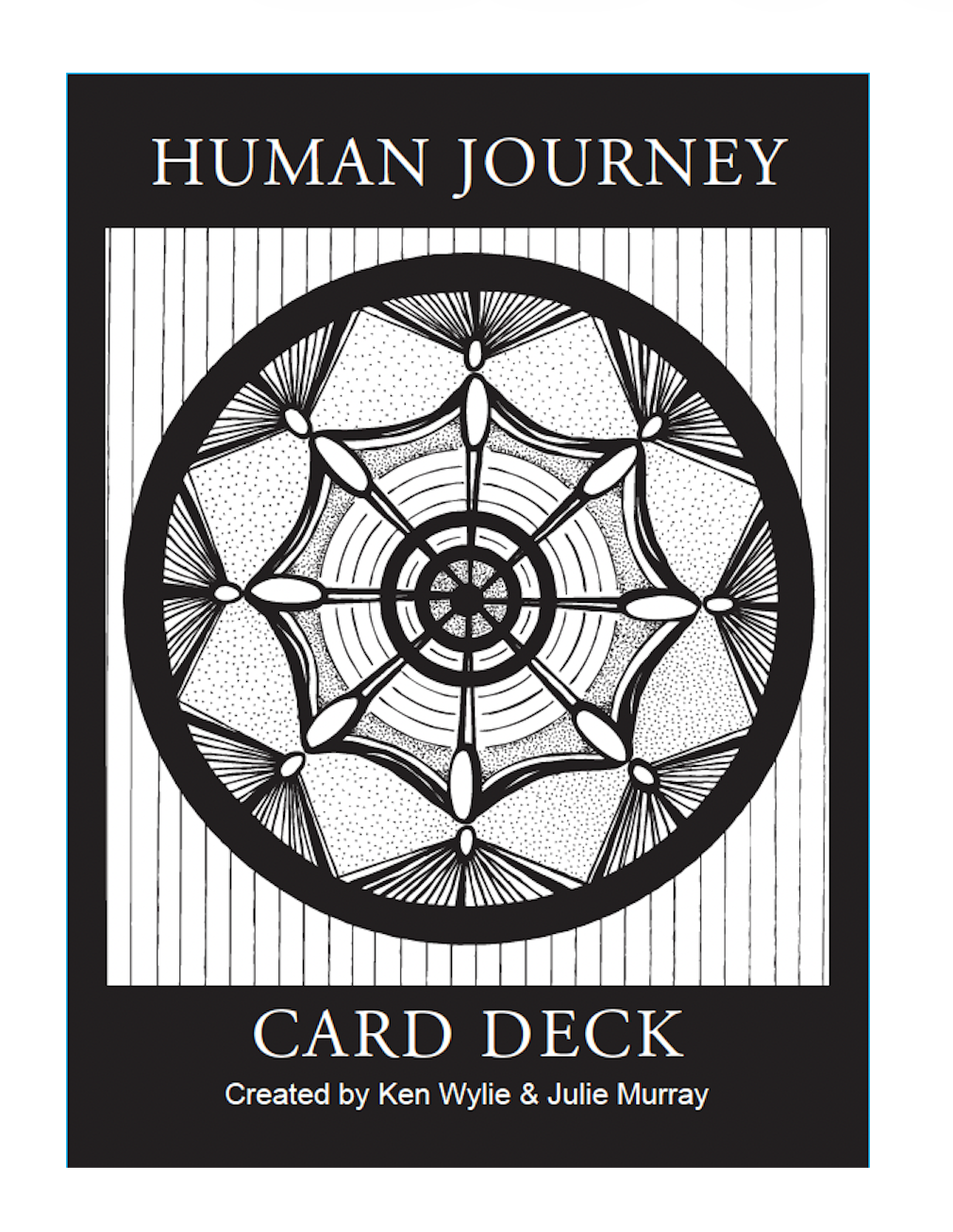
The Human Journey Card deck is a stand-alone tool and a critical part of deeper explorations we offer at Archetypal called Mindset Awareness for Risk Decision Making. Most situations we find ourselves have potential for undesired consequence. The Card Deck helps us thrive and stay alive by fostering awareness of our limiting behaviours and promoting the kind of balances behaviours that keep us grounded and making our best choices.
Humans, who work and play in all varieties of High Potential Consequence situations (including our relationships) are exposed to the same challenge. Being out of balance. In our western culture, we tend to respond to challenges habitually. The opportunity we have is to recognize all of the skill sets we can use to manage potentially consequential situations and to find the balance among them.
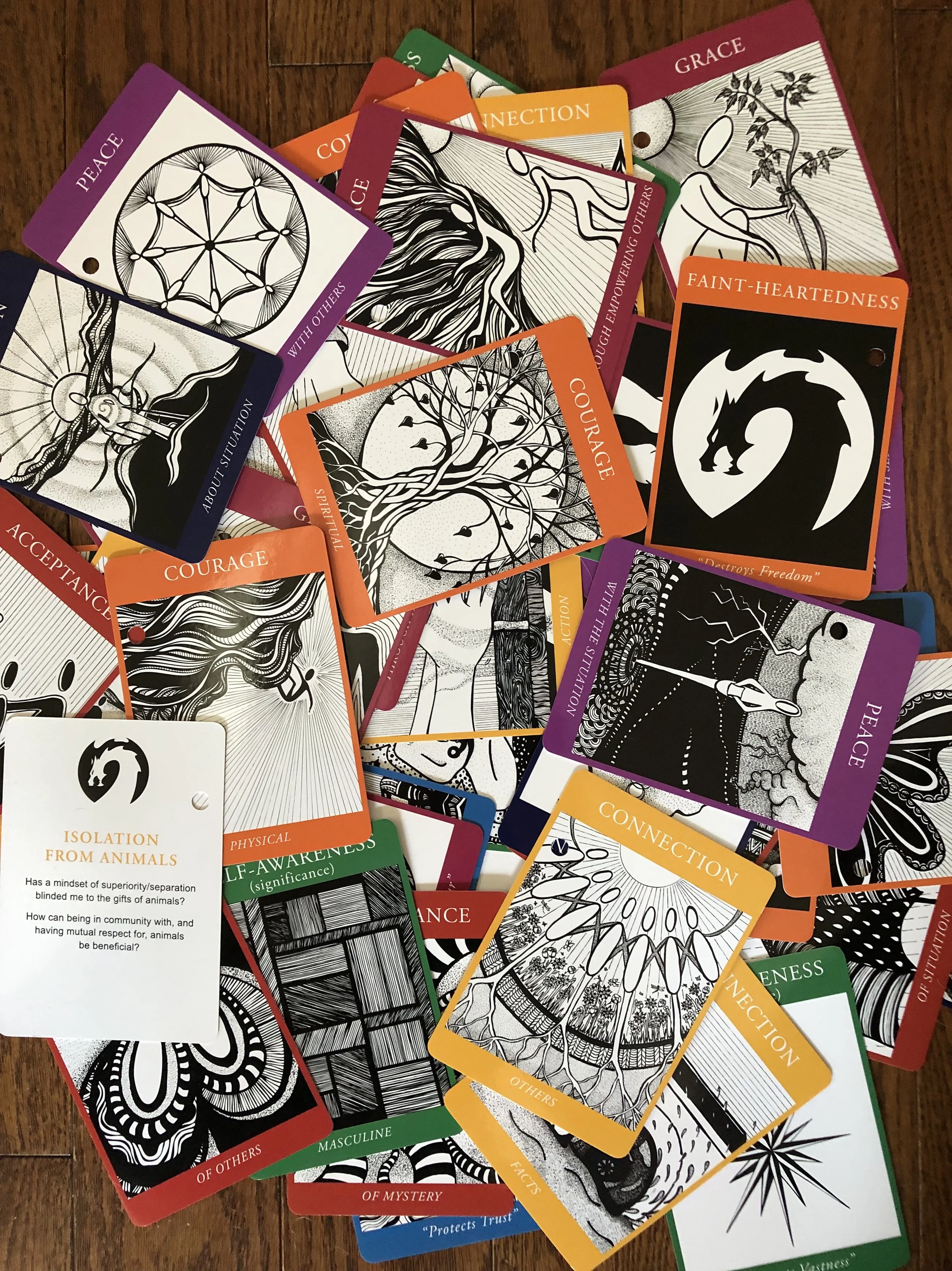
In the Card Deck. There are eight coloured title cards that present our initial guide to the balancing the process of: Acceptance, Courage (Heart based responses), Connection, Self-Awareness, Grace, Truth, Intuition and Peace. Operating in this space is our goal. Of course, the big awareness is that all of these desirable responses to challenges have a an out of balance form; (Denial & Acquiescence), (Faint-Heartedness & Over-boldness), (Isolation & Entanglement), (Insignificance & Self-Absorbed), (Hubris & Martyrdom), (Deception & Disruptive Truth) , (Over-Intellect & Reflexivity) and (Chaos & Over-Order). Recognizing our being out of balance, is where the pithy work comes in.
Each title card has a number of concepts that provide a deeper resolution for the concept. These cards have the potential of helping us deepen our understanding of ourselves within the context of the situation.
Testimonial
I used the deck with an advanced wilderness life support course in Kananaskis with medical students, nurses, and paramedics.
The Archetypal card deck was a profound way to let me express/showcase a way of approaching critical scenarios and debriefing them with good judgment. I . . . also leveraged the cards versatility to proactively help teams prepare for extended trips and explore human factors that can contribute to an excess of "shadow powers" in a group setting.” Chris Lipp
How does the Human Journey Card Deck work?
The card deck is made up of three elements: the Mindset Awareness model, a set of Title Cards and a set of Reflection Cards.
Mindset Awareness Model
You can use this card as your guide when working with the deck. The mindsets listed on the coloured portion of the model represent Luminant-Power decisions that expand one’s options. The list of limiting behaviours found on the black portion of the model represents Shadow-Power decisions that can limit one’s options. Particular attention should be paid to staying on the middle path. . .Between shadow and light. This is the balance one must seek. For example, Hubris is essential for mountain travel because the places we go require a version of confidence. But hubris becomes terribly hazardous when out of balance because it closes down important processes and options. When paired with the grace of humility, there is an opening to important processes and options.
2. Title Cards
There is a title card for each of the eight core mindsets that keep us in either Luminant or Shadow Power; each title card is a different colour and has a large black dragon on the back. This deck is designed to be used in the field (Onsite) and to provide a reminder of all the categories. On the front of each title card is a list of sub-mindsets that are the basis for the reflection cards of the same colour. The sub mindsets on the front also form the basis of the corresponding limiting mindset that holds us in Shadow Power. For example, on the Courage title card, a sub-mindset is Social. Social Courage. This sub-mindset is also applied to the shadow on the back of the card. Social Faint-heartedness. The Title card is a reminder of Social Courage & Social Faint-heartedness.
3. Reflection Cards & Questions
There is a reflection card for each of the sub-mindsets found on the eight main title cards, which offer deeper exploration of pathways toward the mindsets explored in those cards. The back of these cards is all-white and contains a set of reflection questions.
How Do I Use the Deck?
Self-Reflection
Focused reflection: Lay out all 8 title cards and choose the card that you are drawn to (or best fits the situation you are currently facing or have experienced). Gather the reflection cards of the same colour and journal or reflect on the questions posed on the back of the cards.
Random selection: Spread the reflection cards out in front of you. Close your eyes and choose a card. See if there is a nugget of wisdom there for you.
Effective Communication with Others
Focused reflection: Use the card deck to foster deeper communication between you and others when making decisions or when the safety of your group is paramount. You can start with the eight title cards and use the reflection cards to deepen the conversation.
Theme of the Day: Choose a reflection card as a theme for the day or week and use it to broaden your communication as a team, family or partnership.
Group Debrief
Focused reflection: Lay out all eight title cards and use these cards as a guide for your group to discuss your experience so you can better understand your decision-making process and what could be improved upon for next time. The reflection card questions can also support this process.