
Ancient Wisdom & Risk Management
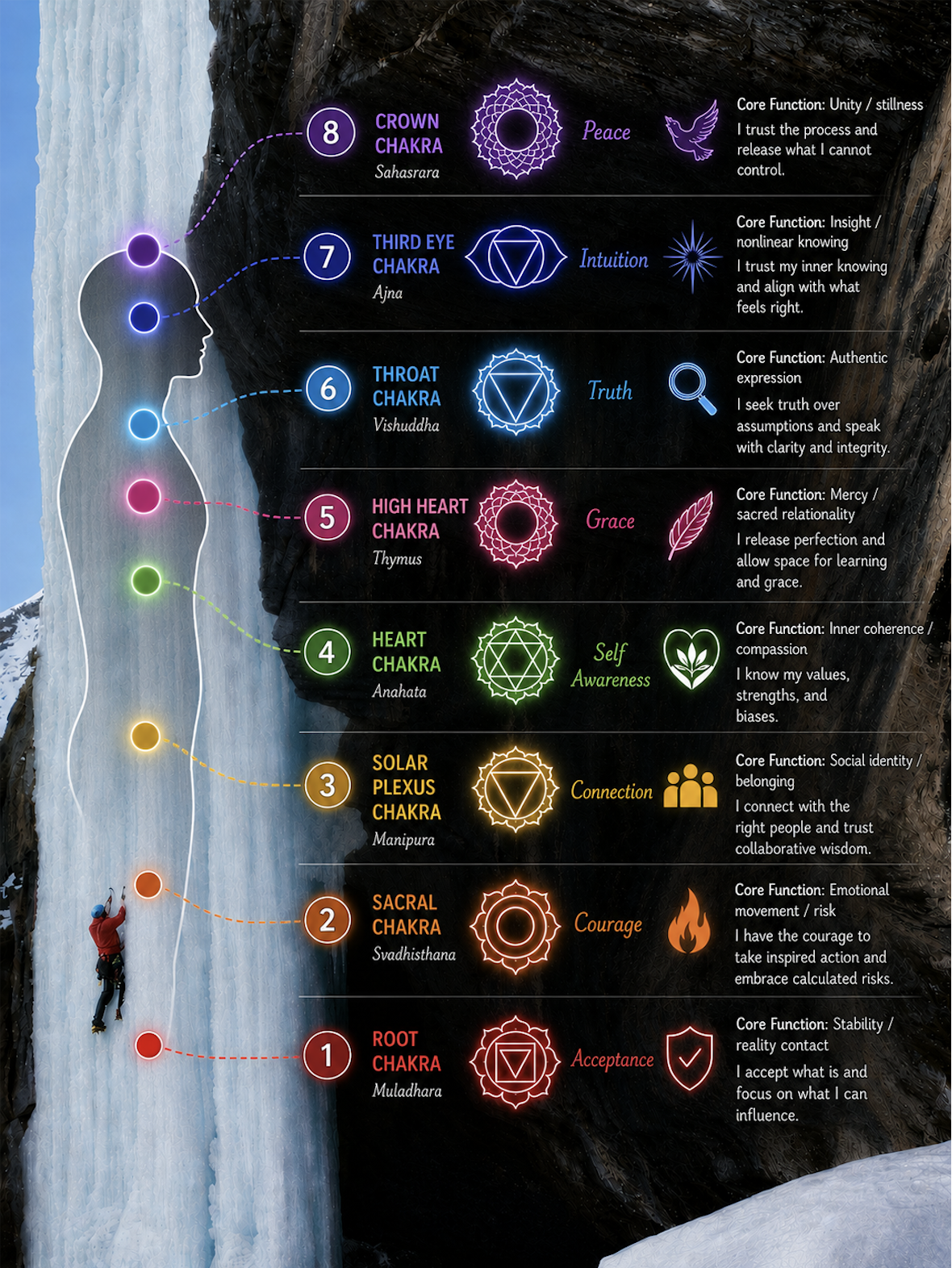
The Chakra system provides the basic framework for human inputs. When we let the Chakras fall out of alignment, we have issues.
A Human-Centered Model for Risk Decision Making
15 years ago, when I sat down to write about two 7 fatality disasters, it was not lost on me that there could be connection to the Chakra system. It just made sense. So I crafted my book Buried, on this premise. The lessons loosely followed the system. Today, I see more clearly, that there is powerful utility in using this ancient wisdom.
Most safety and risk management systems focus on procedures, controls, compliance, and measurable hazards. These are essential—but they rarely explain why organizations populated with individuals drift toward failure in the first place.
Major incidents are often born long before the technical failure occurs. They emerge from:
denial of reality or not challenging it
fear,
social isolation,
lack of self efficacy,
hubris or martyrdom,
deceptions or disruptive truths,
Over thinking or reactivity
soft chaos or too much order
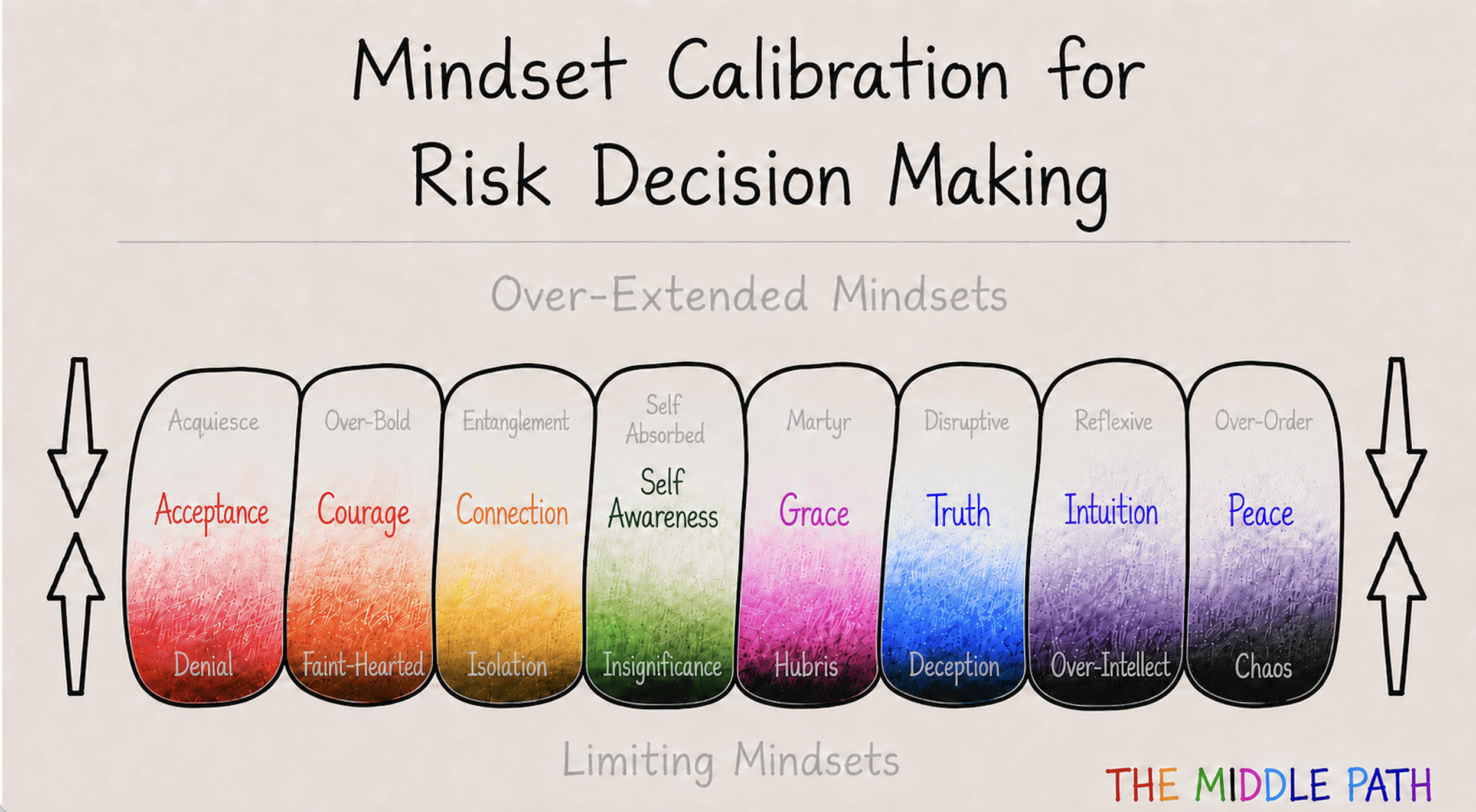
To better understand these invisible precursors, I’ve been exploring an integrated framework that combines two powerful concepts:
the chakra system as a symbolic map of human and organizational function, and
a “Middle Path” mindset calibration model for decision-making.
Together, they create a practical way to diagnose cultural imbalance inside teams, leadership structures, and operational systems.
The Core Idea
Every functional domain in an organization can drift into:
a deficient state,
a balanced state, or
an over-extended state.
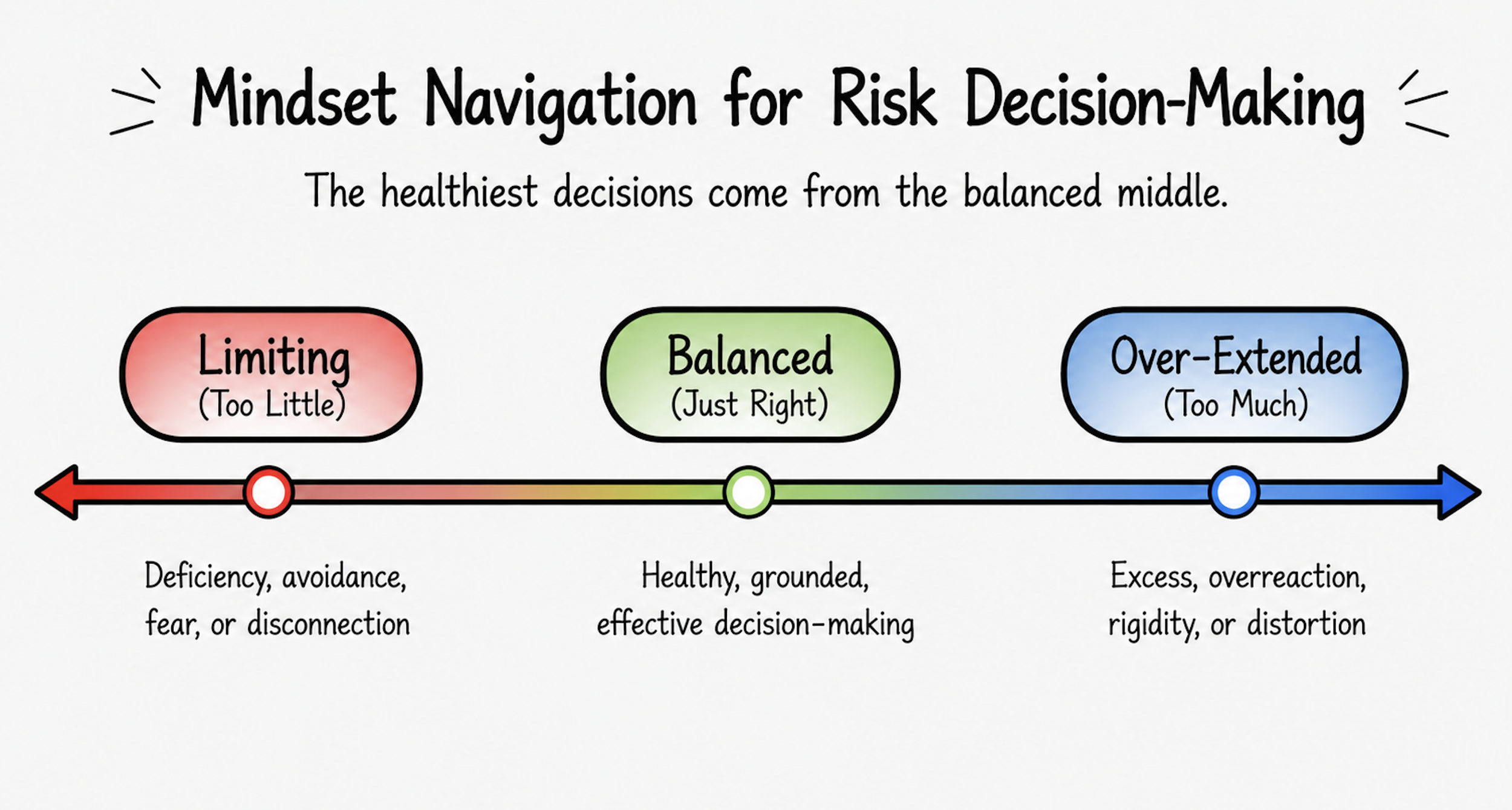
Risk increases at both extremes.
The goal is not maximizing a trait indefinitely—it’s maintaining calibration.
For example:
too little courage creates paralysis,
too much courage creates recklessness.
Likewise:
too little order creates chaos,
too much order creates rigidity.
Safety lives in the adaptive middle.
Archetypal.ca