
The Prime Directive for Response to Tragedy; Learning
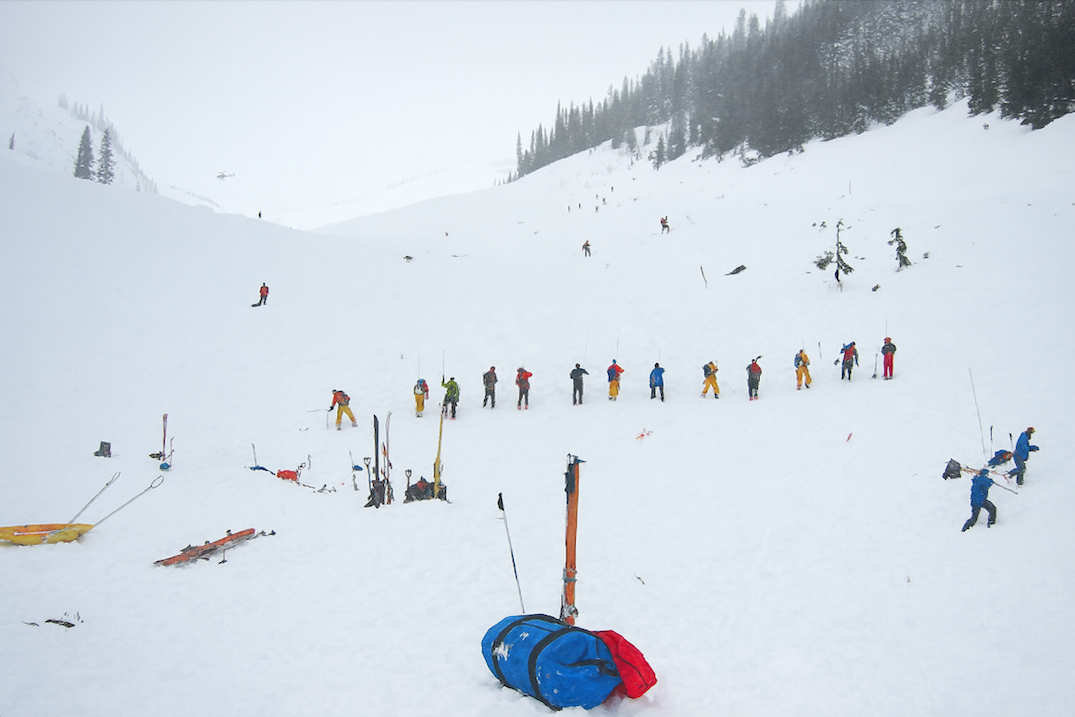
The Scene Feb 1st, 2003 Connaught Creek
The pictured seven high school-age youth were killed 23 years ago on February 1st, 2003, in an avalanche on a high school outing at Rogers Pass in the Selkirk Mountains of BC.
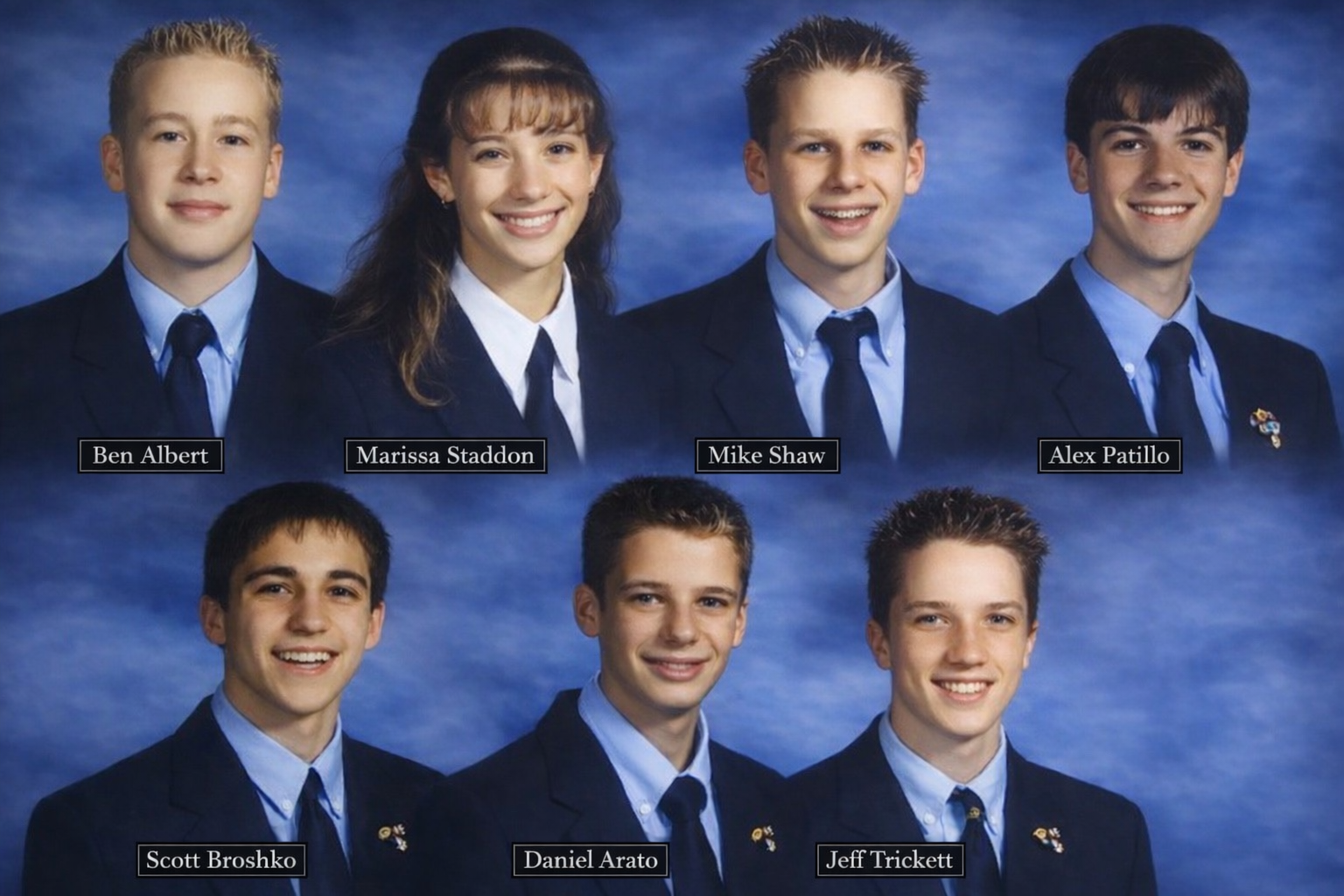
School Memorial Image
It would not be an overstatement to say that the Connaught Creek Tragedy is a template for learning that drives high-utility change. In remembering these seven high school students: Ben Albert, Marissa Staddon, Mike Shaw, Alex Patillo, Scott Broshko, Daniel Arato, and Jeff Trickett, we can mostly say that their sacrifice and the searing loss for all who knew them taught us to learn.
In the aftermath of the Connaught Creek disaster, Judith and Peter Arato were parents who understood that a tragedy of this magnitude demanded transformation to foster growth and development. After several months advocating for change in youth outdoor programming and initially encountering complacency from the school and Parks Canada, they were fortunate to find Alan Latourelle, then CEO of Parks Canada. Not only did Latourelle have the humility to listen, but he also had the courage and resources to create the right environment for learning that fosters change.
In support of the Aratos, resources were put in place, and the long, hard work of listening, engaging, and uncovering began. The results were notable, including the creation of the Avalanche Terrain Exposure Scale and the Custodial Group Policy (both of which addressed youth risk tolerance), the CAC, and the Canadian Avalanche Centre, now known as Avalanche Canada. (And provides public avalanche education and forecasting), and the evolution of the entire risk management culture at both Strathcona Tweedsmuir School and the Calgary Board of Education. The public now benefits from all of these systems. While remembering these seven youth who lost their lives, it is important to honour the sacrifice they and their families and communities made for the awareness for which we now benefit.
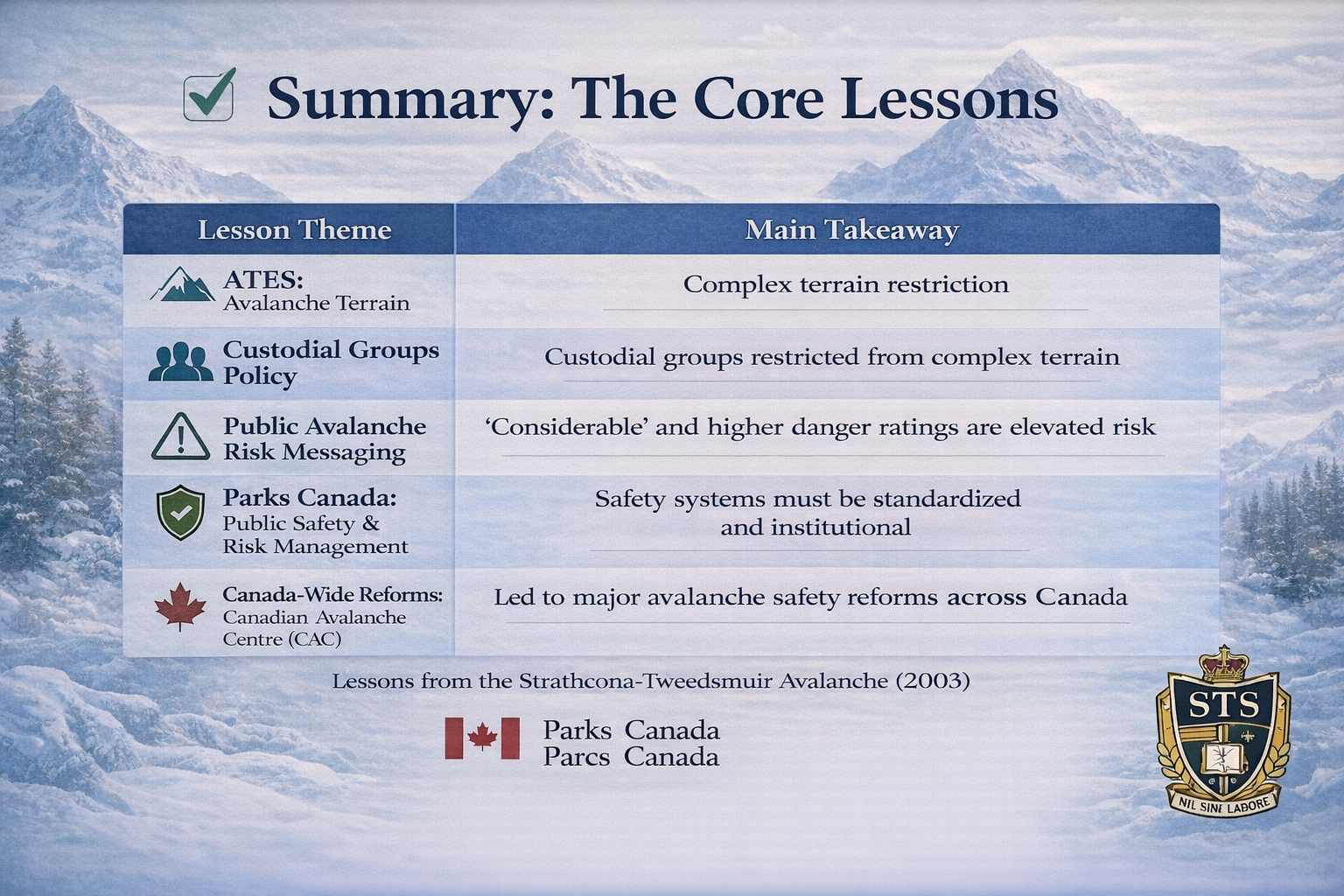
AI crafted image and content
The school also built a memorial to Ben, Daniel, Scott, Alex, Michael, Marissa, and Jeff, and they host a commemorative event each anniversary. In a recent discussion with their current Head of School, Carol Grant-Watt, she stated that it is their “sacred responsibility” to continually learn and embody the lessons of the 2003 event.
With this imperative in mind, I believe there are at least two lessons we still need to learn.
First, this tragedy happened because we were ignorant of: terrain rating, youth risk tolerance, the need for a national avalanche centre, avalanche forecast education, and culture. As a society, we failed to have these conversations and to respect their foreseeable needs. It is not a stretch to assume that some in the community saw problems but were brushed off, as is far too often the case. Anticipating a need for behaviour change before tragedy is a rare virtue. But this virtue underpins every frank discussion about terrain, risk tolerance, (snowpack) conditions, and culture, which is critical for making sound choices by everyone who heads into the winter backcountry.
Secondly, it was not the teacher’s fault; most of those involved were either ignorant or turned a blind eye before this tragedy occurred. This is a wrong that still needs to be righted. My dear friend Jim Preston, who worked in the program but was not there on the day, spoke his final words to me as he was dying in hospice with cancer, “We went to Rogers Pass because it had a more stable snowpack than the Rockies.” Their choices as a team made sense to them.
I still have horrible images in my mind’s eye from responding to this tragedy. The only comfort for any of us affected by this disaster is creation happened. This is the prime directive for tragedy, learning and creation.